
This Location Watch was prepared with insights from Lee Cahalane of SupportNinja and Dr. Louis Siebrits of Resolv Global alongside broader industry research and market data on Colombia’s BPO and CX landscape. These perspectives highlight why Colombia is increasingly recognised as a leading destination for North American and European markets, and how its outsourcing ecosystem continues to evolve in both scale and sophistication.
Colombia CX and BPO Outlook – 2026
Colombia has firmly established itself as a high-performing outsourcing destination, combining bilingual talent, cultural alignment, and a rapidly maturing CX ecosystem. Once viewed primarily as a cost-saving alternative, Colombia is now recognised as a strategic delivery hub offering both scale and sophistication. The country has also remained relatively insulated from broader regional geopolitical tensions and is steadily overcoming outdated perceptions of political and social instability.
The country’s growth is underpinned by strong export performance, a large and skilled workforce, and increasing global confidence in its outsourcing sector. With BPO contributing significantly to employment and economic output, Colombia continues to attract investment while expanding into higher-value services.
Talent, Language and Service Culture
One of Colombia’s most distinctive advantages is its bilingual workforce, particularly in English, Spanish, and Portuguese. Beyond fluency, Colombian Spanish is widely regarded as neutral and clear, making it ideal for pan-regional support across the US Hispanic market and Latin America.
Agents are often trained in global communication standards, enabling more natural and empathetic interactions that go beyond scripted responses. This service-first mindset is a key differentiator, especially as organisations seek to balance automation with human experience.
However, competition for highly proficient English speakers is increasing, making talent retention and development an important consideration for employers.
Strategic Location and Market Alignment
Colombia’s geographic position offers strong alignment with North American operations, with overlapping time zones enabling real-time collaboration and support. This removes many of the operational challenges associated with traditional offshore models.
For European organisations, Colombia also plays a valuable role as an extension of service coverage. It enables high-quality English and Spanish support into afternoon and evening hours, effectively supporting follow-the-sun models while maintaining operational control and service consistency.
Infrastructure, Scalability and Delivery Capability
Major cities such as Bogotá, Medellín, and Barranquilla provide modern infrastructure, strong connectivity, and secure operating environments aligned with international standards. These urban centres are supported by a broader network of emerging tier-two cities, helping providers scale efficiently while managing costs.
Local governments in these regions are also actively supporting the growth of the BPO sector through initiatives such as “English for Work” programmes and targeted tax incentives.
Colombia’s large population — the third largest in Latin America — further supports workforce scalability. This enables organisations to expand operations or adjust capacity in line with demand, an increasingly important requirement in today’s dynamic CX landscape.
Cost Efficiency and Operational Stability
Colombia remains cost-competitive compared to North America while offering greater operational stability than some traditional offshore markets. Lower wage structures are balanced by relatively healthy retention rates, supporting continuity and service quality.
This combination of cost efficiency and workforce stability makes Colombia particularly attractive for long-term CX programmes rather than short-term labour arbitrage.
Technology and Evolving Service Models
The Colombian BPO sector is actively embracing advanced technologies, including AI-assisted workflows, CRM platforms, and omnichannel support capabilities. Providers are increasingly equipped to manage voice, chat, email, and social interactions within integrated delivery models.
At the same time, the market is evolving beyond traditional BPO into Knowledge Process Outsourcing (KPO). Services now extend into areas such as technical support, digital marketing, finance, legal process outsourcing, software development, and R&D — reflecting a broader shift toward higher-value, knowledge-driven work.
Sector Coverage and Investment Momentum
Colombia supports a wide range of industries, including fintech, healthcare, retail, and technology. Its combination of sector expertise and scalable delivery models makes it suitable for both specialised and high-volume operations.
Global brands have increasingly chosen Colombia as a delivery hub. For example, Amazon and HubSpot operate significant technology and e-commerce teams in Bogotá, while retail brands such as Starbucks, Victoria’s Secret, Gap, Forever 21, Lacoste, and Versace utilise the country for customer support operations. Hospitality provider Marriott International and financial institutions including Bank of America and J.P. Morgan also maintain local operations supporting both back-office and technical functions.
In addition, tech and digital-first companies including AngelList, Modern Health, and Hired are leveraging Colombia for nearshore engineering and product teams. This trend highlights the country’s transition from a cost-focused BPO destination to a strategic hub for premium bilingual talent, particularly in Bogotá and Medellín.
What Clients Should Consider
While Colombia offers a compelling value proposition, there are several factors organisations should evaluate:
- Language quality can vary between providers, making thorough vetting essential
- Long-term success depends on strong operational alignment and governance
- Pricing models are evolving, with increasing adoption of outcome-based structures and AI-enabled efficiencies
- Talent competition, particularly for bilingual roles, may influence future hiring strategies
Bottom Line
Colombia has evolved into a powerhouse for CX and BPO. Its combination of linguistic strength, cultural alignment, scalable talent, and growing technical capability positions it as far more than a cost-saving option.
For organisations seeking resilient, high-quality, and scalable customer experience delivery, Colombia offers a well-balanced and future-ready solution. As global CX strategies continue to prioritise responsiveness, continuity, and value, Colombia’s role within outsourcing portfolios is set to expand further.
This Location Watch report draws on insights from Ryan Strategic Advisory’s May 2025 CX Technology and Global Services Survey (Peter Ryan, 2025) and ArvatoConnect’s Onshore-Offshore: Why the CX Value Equation is Changing (James Towner, 2025). As well as CCP’s relationship with scores of UK outsourcing decision makers and over 240 global BPOs.
The Rise of Offshoring
Since the 1990s, offshoring has become a dominant trend in business process outsourcing. Companies initially turned to India for its low labour costs, English proficiency, and large talent pool. In the 2000s, India was joined by the Philippines as another low-cost hub, particularly suitable for customer service and voice-based operations, leveraging its Western (especially US) cultural alignment. More recently, South Africa has gained attention for its quality, favourable time zones, and relatively lower cost base compared with Europe, providing a viable alternative for UK and European clients.
Yet, despite the global rise of offshore destinations, the UK has maintained its position as a key outsourcing market, valued not for cost alone but for quality, governance, and operational reliability. Its mature infrastructure, strong compliance standards, and professional capability continue to make the UK a premium outsourcing environment, where strategic partnerships prioritise service excellence and trust over purely economic considerations.
Value-Driven Outsourcing Partnerships
In 2025, UK enterprises show a clear preference for value-driven outsourcing partnerships that combine advanced technology capabilities with proven operational excellence. Ryan Strategic Advisory’s May 2025 CX Technology and Global Services survey found that AI proficiency, know-the-customer analytics, and competitive pricing are now the top three competitive differentiators for BPO providers. UK buyers emphasised the importance of strong client references and sector-specific expertise, underscoring the country’s preference for relationship-based, high-governance engagements.
Budget Stagnation and Operational Challenges
A notable trend emerging in the UK market is budgetary stagnation. Over 60% of UK CX leaders indicated that their 2025 budgets will remain flat or decline. This is accompanied by concerns over agent attrition and declining service levels, particularly in voice and digital delivery channels. As a result, many UK enterprises are reassessing delivery models, prioritising investment in AI, automation, and analytics to improve productivity without sacrificing quality. The consequence is a heightened focus on “cost-neutral transformation”, shifting spend from headcount to enabling technologies without increasing overall CX budgets.
Research also highlights that poor AI rollouts can alienate agents: 26% of UK contact centre staff are considering leaving due to unclear AI integration strategies, emphasising the need for transparent change management and training (ArvatoConnect, 2025, Impact of AI on Agents).
Onshoring and Reshoring Trends
While offshoring continues to feature in many delivery strategies, particularly to India, the Philippines, South Africa and Egypt, the latest research indicates that some UK buyers are developing a renewed focus on onshore delivery. ArvatoConnect’s 2025 findings report that:
• 73% of UK brands would choose to onshore CX if cost were not a factor
• 34% are actively planning to reshore services that were previously relocated overseas within the next year.
Key drivers behind this transition include:
• Improved staff retention (31%) and access to local talent and cultural familiarity (26%)
• Customer preference for localised support (26%) and better service quality (21%)
• Simpler management structures, regulatory confidence, and access to advanced technologies (25%)
Correctly planned and executed, onshoring is increasingly seen as a future-proof strategy rather than nostalgia. Proximity improves employee engagement, cultural alignment, customer trust, and ensures tighter compliance control, especially for highly regulated industries.
AI, Automation, and Cost Parity
This rebalancing reflects a shift from a cost-driven model to one focused on resilience, agility, and customer intimacy. AI and automation are now reducing the cost of UK-based service delivery by up to 30%, narrowing the traditional economic advantage of offshore operations:
• AI-powered digital agents in the UK: £16 per hour
• Offshore human agents: £15–£17 per hour (depending on which location)
This near-parity redefines the value equation for outsourcing decisions.
Strategic Insights from ArvatoConnect
As ArvatoConnect’s Chief Growth Officer, James Towner, notes:
“Offshoring’s economic promise is fading. Today’s smartest brands are strategically resetting and planning to reshore customer experience for cultural alignment, talent retention, customer preference, and tech-driven agility.”
The emerging model blends 70% digital/AI interactions with 30% human advisors, focusing human talent on empathy, compliance, and complex issue resolution.
Hybrid and Onshore Investments
Ryan Strategic Advisory’s global survey observed limited enthusiasm for expanding offshore capacity among UK enterprises. Instead, organisations are investing in hybrid and onshore models, leveraging automation and analytics to enhance efficiency.
• BPOs are re-emphasising UK delivery centres in cities such as Manchester, Glasgow, and Newcastle
• Investments are going into next-generation CX hubs integrating AI, cloud contact platforms, and multilingual service delivery
And as ArvatoConnects research suggests, providers are piloting AI-enabled ‘micro-hubs’ that balance cost efficiency with high-quality onshore delivery, while maintaining compliance and engaging the local workforce. Of course, the most innovative offshore BPOs are just as focused on automation and AI-driven investment as their UK peers, but technology may be serving to ‘level the playing field’”
Conclusion: The UK’s Resilient Outsourcing Ecosystem
The UK’s BPO and onshoring landscape combines technological sophistication, regulatory stability, and deep sectoral expertise, creating a solid foundation for high-value service delivery.
As brands continue to prioritise data protection, cultural coherence, and high-quality service, the UK’s position as both an outsourcing and reshoring leader is set to strengthen through 2026 and beyond. In the mid-term, the integration of automation, AI support for agents, and reductions in volumes and handling times will provide an opportunity to bring more operations closer to home. This positions the UK not just as a premium delivery location, but as a cost-efficient, technology-enabled alternative to traditional offshore destinations.
This Location Watch was prepared with valuable contributions from Temo Magradze, Founding Partner of Evolvexe BPO, as well as Davit Tavlalashvili, Head of the Investment Department, and Ketevan Kanashvili, Senior Investment Relations Manager at Enterprise Georgia. It also draws on research and insights from Ryan Strategic Advisory, specifically the report “2025 CX Technology and Global Services Survey”. Their perspectives on the evolution of Georgia’s outsourcing industry are especially insightful in highlighting why the country is gaining attention from UK, EU and North American companies as a nearshore and offshore delivery hub.
Georgia is rapidly gaining recognition as a promising BPO destination, thanks to its modern infrastructure, strategic government support, and a clear ambition to grow within the global outsourcing ecosystem. The recent BPO Leaders Summit 2025 in Tbilisi, hosted by Enterprise Georgia and Ryan Strategic Advisory, brought together industry experts, investors and government officials who confirmed the country’s strong potential.
1. Outsourcing Popularity & Market Positioning
As Temo Magradze emphasises, Georgia’s outsourcing industry has grown significantly in recent years. Its appeal lies in affordability, a highly skilled workforce, and a government eager to attract investment. Positioned at the crossroads of Europe and Asia, Georgia combines geographic advantage with a dynamic, pro-business climate, making it an increasingly popular hub for European operations.
According to the Ryan Strategic Advisory – 2025 CX Technology and Global Services Survey (see screenshot), Georgia scores 2.8, placing it slightly below mid-tier in offshore favorability. Yet, several countries ranked lower continue to be regarded as more mature outsourcing destinations due to their established ecosystems and long-standing track records:

- Turkey (2.6) – Longstanding BPO hub with strong multilingual capabilities, particularly in European market support.
- Colombia (2.7) – A leading nearshore delivery market for North America, well known for Spanish-English bilingual services.
- Nigeria (2.7) – Growing rapidly in scale with an established IT-enabled services sector and a deep labor pool.
- Slovenia (2.7) and Bulgaria (2.7) – Both EU member states with recognized nearshore outsourcing reputations, especially in IT, finance, and multilingual service delivery.
Although these markets rank lower than Georgia in the 2025 survey, they are considered more mature thanks to their larger delivery ecosystems, deeper outsourcing experience, and stronger global visibility. The fact that Georgia now scores ahead of such established players underlines its growing credibility and demonstrates how it is winning favorable attention against locations traditionally chosen for offshore and nearshore outsourcing.
2. Cost Competitiveness & Commercial Advantage
Labour and operational costs in Georgia are 40–50% lower than in established Central and Eastern European hubs such as Poland. Average salaries for customer service roles remain in the £456–£608 range, while programmers earn around £1,140 monthly.
One of Georgia’s strongest incentives is its International Company Status, which grants significant tax advantages, including reduced corporate tax rates. Coupled with government-backed grants and subsidies, this positions Georgia as one of the most cost-efficient outsourcing environments in the region.
3. Workforce, Language Skills & Talent Pool
Georgia boasts a multilingual workforce fluent in English, German, Russian and other European languages. Deloitte research estimates over 500,000 multilingual professionals across major cities. The most common roles include customer support, IT helpdesks, finance and accounting, and software development.
Universities and vocational institutes actively integrate English and technical training. Georgia’s education system, including institutions such as Kutaisi International University (developed with Germany’s Technical University of Munich), is producing a steady pipeline of outsourcing-ready professionals, many of whom are multilingual and STEM-focused.
4. Time Zone, Accessibility & Nearshoring Appeal
Situated in the UTC+4 time zone, Georgia overlaps conveniently with European working hours, while also complementing North American operations by enabling round-the-clock coverage.
Infrastructure for travel and remote collaboration is strong: Tbilisi, Kutaisi and Batumi airports all provide direct flights to key European hubs. This accessibility allows easy site visits and integration with international teams.
5. Infrastructure & BPO Ecosystem
Georgia has invested heavily in digital infrastructure, with 97% broadband coverage and widespread 4G/5G access. Tbilisi remains the primary outsourcing hub, but as Temo highlighted to me, there is rapid growth of secondary cities. For example, Evolvexe recently launched a major tech support project with ASUS from Kutaisi, servicing Germany, Switzerland and Austria. Batumi is also attracting investment and fast becoming a secondary BPO location.
6. Government Support & Incentives
The government, through Enterprise Georgia, plays a pivotal role in supporting BPO expansion. Simplified business registration (often completed in a single day), tax incentives, and subsidies for training make it easier for foreign companies to establish operations. While GITA focuses on supporting IT infrastructure and the ICT Association concentrates on IT-related initiatives rather than BPO specifically, these organisations contribute to the broader tech ecosystem that benefits the sector.
Industry associations, such as the ICT Association, also provide a strong bridge between policy-makers and BPO operators, ensuring that the sector’s needs are addressed. Tavlalashvili and Kanashvili stress that this alignment of public and private stakeholders has been critical to the sector’s momentum.
7. Industry Success Stories
Georgia is already home to a mix of international and local players. Companies such as Making Science Sweeft (software development) and Evolvexe Outsourcing (customer support and tech services) demonstrate the ability of Georgian firms to deliver value across Europe and North America. Majorel, Concentrix, EPAM Systems and Viber have also scaled their operations in Georgia, validating the country’s growing importance on the global outsourcing map.
8. Cultural Fit & Service Excellence
Georgians are often described as the “first Europeans”, with a cultural heritage rooted in hospitality, loyalty and respect for education. This translates into a natural customer-service orientation, where tone, empathy and relationship-building come naturally. This cultural foundation gives Georgian agents an edge in handling sensitive, customer-facing interactions with empathy and professionalism.
9. Innovation, Growth & Future Trends
Georgia is moving beyond traditional call centres into higher-value areas such as software development, fintech, AI-enabled services and digital operations. With IT exports surpassing $1 billion in 2024, the country is positioning itself as not only a cost-effective outsourcing hub but also a source of innovation and digital transformation expertise.
Looking ahead, Temo Magradze predicts that in the next three to five years, Georgia will transition from being primarily a low-cost option to a recognised hub for quality-driven, technology-enabled outsourcing, while still maintaining a commercial edge over EU and US markets.
Final Thoughts
Georgia is establishing itself as one of the most dynamic emerging BPO destinations in Europe. Its multilingual workforce, strong government backing, cost advantages and expanding digital ecosystem make it an attractive nearshore and offshore option for companies across the UK, EU and North America.
As Magradze, Tavlalashvili and Kanashvili each highlight, the country’s unique blend of hospitality-driven service culture and tech-driven innovation gives Georgia a competitive edge. While the sector is still developing compared with more mature hubs, Georgia’s momentum is undeniable, positioning it as a location to watch very closely in the years ahead.
Want to find out more or meet vetted providers in Georgia? Drop us a line, we’re happy to help you explore your options.
To explore why, I spoke with three top-class BPO and Jamaica experts, each of whom brings their unique perspective, from testing multiple outsourcing destinations around the world to Jamaican nationals deeply engaged in the country’s thriving BPO ecosystem.
According to Brad Meiller of Spectrum Brands, who has over a decade of client-side global outsourcing experience from in both retail and telecommunications, and whose philosophy is closely aligned with CCP’s own, while cost and service quality matter, it’s cultural alignment that often makes the biggest difference. And in his view, Jamaica ticks all the right boxes.
1. English-Speaking Advantage
As a native English-speaking country with strong cultural ties to the UK and US, communication is seamless, nuanced, and naturally aligned with Western service expectations. This fluency translates to higher first-call resolution rates and empathetic customer service experiences. And it’s not just language. Jamaican agents bring tone, warmth and cultural familiarity to the table too.
Jamaica is the third-largest English-speaking nation in the Western Hemisphere, and its accent is well-received by British customers.
2. Infrastructure & BPO Ecosystem
Jamaica’s government has invested heavily in digital infrastructure and the BPO sector, recognising it as a key pillar of economic growth. The island now boasts multiple outsourcing hubs in cities like Kingston, Montego Bay, and Portmore, all supported by reliable high-speed internet, business parks, and international flight access.
Connectivity is robust and reliable, with redundant data centres in locations such as Miami ensuring business continuity. The country also hosts two incubators, 220 seats in Montego Bay and 140 in Kingston. This provides scalable options for both startups and growing teams.
Modern network infrastructure, including low-latency fibre and support from the Universal Service Fund, gives Jamaica the capacity to meet UK standards. Ongoing developments like Starlink’s entry to the market continue to strengthen Jamaica’s digital resilience.
Big names like Concentrix, Teleperformance, Sutherland and Alorica already operate successfully on the island, proof that Jamaica can handle high-scale, high-performance outsourcing operations. And with global success stories like Amazon, Netflix, and Target leveraging Jamaican talent, the island’s credentials are hard to ignore.
3. Strategic Time Zone Alignment
Many BPOs in Jamaica provide 24/7 coverage, with service hours tailored to key markets including the UK. For UK businesses, Jamaica’s location also supports efficient logistics. Direct flights from Kingston and Montego Bay to London, Manchester, and Birmingham make it one of the most accessible Caribbean destinations. And with such a solid telecoms infrastructure , remote work is also a viable staffing option, particularly useful for late-night or flexible coverage.
4. Talent Pool & Education
With a literacy rate above 88% and a large youth population, Jamaica is producing thousands of skilled graduates annually, many of whom are turning to the BPO industry for stable careers. Institutions like the University of the West Indies and local vocational programmes are directly feeding the outsourcing workforce, with a strong focus on service, IT, and administrative support.
There is also strong industry-academia alignment. The Global Services Association of Jamaica works hand-in-hand with universities and training programmes to ensure the labour force is future-ready. And not just for entry-level roles, but for higher-value positions in areas like IT development, integrations, and knowledge-based work.
Jamaican education initiatives such as the HEART/NSTA Trust program provide training across a range of skills such as language communication, sales, data entry, CRM, and IT, ensuring a steady flow of qualified professionals.
5. Competitive Costs with Cultural Fit
While Jamaica may not always be the cheapest, it offers incredible value-for-money when you factor in native English fluency, low agent attrition, cultural compatibility, and a growing pool of trained talent.
At time of writing, the exchange rate between the British Pound (GBP) and Jamaican Dollar (JDM) remains competitive, as highlighted in recent research by Peter Ryan Strategic Advisory, a leading market research and consulting firm focused on CX and BPO.
Critically, the service offering goes beyond standard customer service. Jamaican providers cover front- and back-office functions, including sales, debt collection, IT support, and more.
Importantly, Jamaica is no longer viewed solely as a destination for transactional CX work. It’s now recognised for complex support roles, higher agent touchpoints, and knowledge process outsourcing (KPO) – including finance and accounting services aligned with UK qualification standards.
6. Government Support & Incentives
With special economic zones (SEZs), tax incentives, and strong partnerships with international investors, the Jamaican government has rolled out the red carpet for global businesses. Whether you’re setting up from scratch or partnering with an existing provider, the regulatory environment is built for speed and scalability.
The country’s legal system is modelled closely on the UK’s, providing familiarity and confidence for British and Commonwealth investors. The same is true of its education system, which mirrors the UK structure and standards.
Jamaica’s 2023 Data Protection Act aligns the country’s data policies with international standards, making it suitable for regulated industries like banking, healthcare, insurance, and utilities.
During the April 2025 Outsource2Jamaica event we attended, the government’s commitment was front and centre – Jamaican Prime Minister Andrew Holness personally welcomed international guests and industry speakers, underscoring the strategic importance of the sector.
As Gloria Henry of the Port Authority of Jamaica and Conrad Robinson of the Jamaica Promotions Corporation (JAMPRO) – both are helping position Jamaica not just as a viable outsourcing option, but as a strategic hub for global service delivery – explained, Jamaica isn’t just promoting itself, it’s backing up its vision with significant public investment. Over $15 million has already been invested into talent development through global training programmes.
JAMPRO also offers “concierge-style” support to businesses entering the Jamaican market, further streamlining the setup and integration process for UK firms.
Final Thoughts
Jamaica is a smart, scalable, and soulful choice for businesses looking to outsource. With its blend of cultural alignment, language fluency, government backing, and operational maturity, Jamaica stands out as a trusted and future-ready BPO partner for UK businesses, particularly for those seeking alternatives to traditional offshore delivery points.
And as Brad Meiller shared with me, BPO selection processes across global organisations often involve extensive RFPs and a lot of box-ticking. Thanks to the strengths outlined above, Jamaican BPOs make that box-ticking exercise remarkably straightforward.
Want to find out more or meet vetted providers in Jamaica? Drop us a line, we’re happy to help you explore your options.
With thanks for their insights to Brad, Peter, Gloria, Conrad and CCP’s Phil Kitchen, who all attended the Outsource2Jamaica event in April 2025.
In early February I attended the IP Integration “Spotlight” event at the Midland Hotel in Manchester where we were provided access to some great insights from the team and from Steve Morrell of ContactBabel, what follows are my thoughts and reflections arising:
Something around customer adoption of automated solutions has been playing on my mind, it often happens when I suggest someone talk to an automated bot solution so they can experience first-hand how far the technology has come, where it is going and what the real possibilities are.
Being in the CX world and having several partners on our network that have such solutions, I have a number saved to my phone, just for this type of conversation. If I pull the phone from my pocket, find the number, dial it and hand it someone to have a conversation then I often feel that the “conversation” isn’t as free flowing as it should be. Why? Well that is a great question.
I suppose it could be that for the past 15 years when contact centres have effectively forced customers to speak to automated voice response systems, we have typically limited customer so saying one word “listen to the following list of options and then say the option you would like” or “in a few words please say why you are calling today” so for years we’ve been saying ‘please speak to this automated system in a short staccato format’. Now, in a matter of a couple of years, some businesses are offering customers the opportunity to speak freely to their bots or automations, whilst others are still on the limited few words space. No wonder consumers get confused – and the acceptance and adoption of voice automation could well be held back as a result.
Voice is here to stay?
The truth is that voice interactions are still our favoured route of contact as customers, when it comes to getting things done and obtaining reassurance that we’ve been heard. Whilst the death of voice in contact centres has been forecast for the past 20 years, the reality remains that voice is here to stay, millennia of evolution cannot be undone so quickly. Data shared at our webinar on the State of the Customer Experience Market with David Rickard of Everest Group in November (article link) validated this, as their research highlighted that 72% of revenues amongst the outsource community were still coming from voice-based activity in 2023 when both agent supported voice and conversational AI driven interactions were considered.
The data shared in the room in Manchester by Steve Morrell of ContactBabel corroborated this view, with 64% of interactions being cited as voice in his forthcoming 2025 report. Also that we are so keen to ensure that we speak to someone that we will now wait in the longer queues that have been identified post pandemic and that we have accepted these as the norm.
So, as a human race we have a deep attachment to use of voice, however I’m still receiving articles daily which suggest otherwise – and ours is an industry which is based on employing people to talk to customers. We need to acknowledge that ‘the bots’ or automation is coming for our lunch, which according to an article in the New York Times on February 1st it may however already be in a place to arrange someone to bring our lunch and where may that end?
An article by Kevin Roose details several tasks which he managed to complete using OpenAI’s Operator, a new AI agent in the week prior. Most of the tasks it did autonomously with minimal intervention. It met its brief of being an AI agent that uses the computer to accomplish valuable real-world tasks, without the need for supervision, to complete tasks in the background with a handoff back to the user to enter passwords or payment card details. However, in Kevin’s article he talks of how it ordered lunch to be delivered to a colleague’s house and responded to LinkedIn messages well, up to the point where it started signing him up to attend webinars, amongst other tasks. There were, however, several tasks where the automation struggled or needed an amount of reassurance or confirmations. Because of which he felt that it would have been faster to do the tasks himself, but acknowledged that the AI agent is at an early stage of development.
What we do know is that the evolution of technology is only gaining pace. Peter Diamandis, founder of the XPRIZE (https://www.xprize.org/) , is cited as having said in 2020 that “the next 10 years will bring more progress than the last 100 years” Given the pace of change in the past 5 years, it is reasonable to assume that Moore’s Law will hold true in this instance – and that we need to be ready for this.
As humans we like voice, we choose voice. But if personal assistants in the form of OpenAI’s Operator or DeepSeek were to be adopted by the general public (your customers) to complete their home admin tasks, then these systems won’t have the same emotional connection to voice conversations and will be happy to interact directly with a company bot. However, how quickly will we reach that point?
Public adoption is key then?
We can implement the best solutions in the world, but if nobody uses them, what use are they?
Whatever is coming next, we have a dependency on customers to embrace and use those solutions, whether that is voice automation in the contact centre or the potential for the eventual use of “their own” automation by customers to engage with brands to resolve issues.
We’ve seen before conversations around ‘brand by-pass’. Now, using an Alexa or alternative voice-activated AI assistant to complete simple tasks is clearly the gateway to us getting to a point of asking technology to, say, engage with our utility provider to amend our direct debit or to find a cheaper insurance renewal. At this point we as individuals will have less input to what brands we choose to purchase, so then the brands that will succeed are those that are easiest for our automations to interact with.
But before we get to this utopian vision of admin free lives with our AI assistants ensuring the effective running of our homes and lives, we need to pass a point of public adoption of AI.
A 2023 report from Ipsos shows that 66% of people they surveyed globally expect that products and services using artificial intelligence will profoundly change their daily life in the next 3-5 years. Whilst this is the average, the range of responses on a country and demographic level vary considerably, with the proportion expressing this belief in South Korea as high as 82%, whilst France sees the lowest number agreeing with this sentiment at 51% (we in the UK see 58% agreeing with this statement).
Products and services using artificial intelligence will profoundly change my daily life in the next 3-5 years – 66%
So, whilst there is broad agreement that services using artificial intelligence will change our lives, what people are willing to adopt and how is a key consideration, acknowledging that some will be unable to adopt due to a variety of reasons.
The conversation at the Spotlight event therefore quite naturally centred on work that could be done to implement changes or applications of AI to better support the contact centre agents in delivering service efficiently without too much impact to the customer, generating a series of marginal gains which support the agent in resolving customer queries, potentially reducing call durations and in turn queues and repeat contacts – a series of win/win scenarios which:
- Improve service
- Reduce pressure on the contact centre team
- Reduce repeat contacts
- Reduce the time customers spend trying to get through
- Reduce costs
- Improve staff wellbeing
Changes which fulfil the appetite of businesses to implement changes and leverage AI, but consider how willing customers are to adopt these changes.
Is some re-programming required?
If we want the possible AI solutions to be successful, we will have to consider how we guide customers to use these solutions most effectively. Our industry has created a sub-optimal situation through a combination of poor customer experiences in the past, limited system capabilities and a “tell me in three words” approach. If we want customers to embrace the possibilities of technology, then we need to bring them on the journey.
Consider how self-serve check-outs have become the norm when we are out shopping in recent years . There is a journey that I’ve certainly been on to this point, which I discussed with IPI’s Sam Grant at lunch.
Coming prepared, we need our customers to come to the contact prepared to engage with AI.
Similarly, from prior experiences I soon learned that I need to stop putting my shopping bag in the bottom of my basket, then putting my items of purchase on top of it, which created friction in the process when I needed to get to my bag to enable me to pack items as I scanned them. So, ideally, we need our customers to come to the contact prepared to engage with AI (unless they don’t want to?)
Offering a choice? Do I want to self-serve or would I prefer to queue?
When I’m approaching the tills, I can see a queue for a till with a cashier or I can see available self-serve checkouts. If I can also see someone there by the self-serve tills to support me, then I can make an informed decision.
Unexpected item in bagging area! Solutions need to be flexible enough to minimise friction.
That bag I just dug out from my basket, I’ve tapped that I’ve brought my own bag, but it is perhaps heavier than the scales expect, therefore I’ve got an unexpected item. I’m removing and resetting the bag but there is a red flashing light and now I’m waiting for someone to come help me. We’ve all been there (please tell me this wasn’t just me!). The solution has now evolved, though, replacing scales either with additional trust by the retailer, or with cameras, but the result is a smoother customer experience.
Authorisation for purchase There will be times when someone must step in. If so, ensure it is done in a timely fashion.
OK I bought wine, it’s the weekend, please don’t judge me. The process to verify that I’m of age and can make that purchase has parallels also. We need to ensure that if a customer needs support then it is quickly available. Now I want those annoying flashing lights to flash brighter, because I need help to complete my purchase.
How do you want to pay? Payments need to be frictionless, tap and go, no creased banknotes!
The same will apply to your callers they need to be able to make the payment without being moved to another channel and of course you need to ensure you are properly protecting that payment data.
Do you require a receipt? perhaps we need to acknowledge that customers will want validation of their conversation, of what was committed to and that they can trust that it will be done.
It has taken me a long time to reach the point of clicking no to a paper receipt. I want to be able to evidence that I’ve paid and not just walked round the shop popping things in my bag. Part of the reason so many of us are still reverting to speaking to a human when we have an issue, other than our lived experiences of trying to explain a complex situation in 3-word blocks, has to be that we can say “I talked to …. And he said he’d sorted it”.
What does it all mean?
People are complex. The implementation of self service and automation of the simpler query types means that average contact centre conversations are now much longer than they were and with rising staff costs there is a clear pressure on businesses to make changes to reduce customer servicing costs.
There is a broad spectrum of solutions available to support businesses address these challenges, whether outsource or technology. These need to be properly aligned to your objectives, and it is likely that you may need to speak with someone around how to select, prioritise and deploy these solutions.
If you need to chat then feel free to drop us a line.
At Customer Contact Panel (CCP), we’ve witnessed first hand how these factors are influencing decision-makers, especially CX leaders and CFOs. If you’re in the midst of making an outsourcing choice, you’ve probably got one of the following on your mind.
Growing Customer Demands: Meeting High Expectations
It’s not just about answering calls anymore. Customers want fast, personalised, and empathetic interactions that feel seamless and aligned with your company values. This means businesses must be more careful than ever when choosing an outsourcing partner. A BPO’s cultural fit with your company is crucial—they need to speak your tone, align with your brand, and uphold the level of service your customers expect – all of which take time which you don’t have. So, companies are scrutinising potential partners more closely, ensuring they’re a perfect match.
Technology: The New Wild Card
Right now, you’re being asked to do more with less or deliver a better service with the same budget. With inflation, high interest rates, and currency fluctuations, offshoring doesn’t feel like a financial guarantee anymore. Add in automation—think AI tools and chatbots – and CFOs are starting to wonder if tech could be the silver bullet to that beast of a budget. Whilst AI and Automation can scale fast, they can come with hefty initial costs. Businesses are now weighing their options:
- Do they stick with outsourcing (onshore, nearshore, or offshore)? or
- Do they double down on tech?
It’s a tough decision. Get it right, and they could boost customer loyalty; get it wrong, and it might lead to a backlash.
ESG: Outsourcing in a Politically Charged World
Outsourcing is no longer just about cutting costs; it’s also about navigating complex ethical and political waters. With Keir Starmer pushing for stricter ESG (Environmental, Social and Governance) standards, businesses are questioning their outsourcing partners, especially if those countries are known for poor labour practices or environmental issues. Throw in political instability and outsourcing now feels like a risky gamble. Operations could grind to a halt at any time, and businesses can’t afford that.
On top of that, data security is tighter than ever. With the UK government’s more stringent regulations, especially for industries like finance and healthcare, outsourcing is becoming bogged down in compliance red tape. A single data breach could ruin a brand’s reputation and customers’ trust—so finding a partner who understands data security is more important than ever.
Lastly, with the UK’s £22 billion budget shortfall and a focus on reshoring jobs, companies are balancing cost savings against their political and ethical responsibilities.
How CCP Makes Your Life Easier
At CCP, we get it – outsourcing feels complex. But we’re here to simplify it for you. We help businesses make smart, informed and equitable choices through services such as:
- Partner Matching: We connect businesses with a handpicked network of pre-vetted outsource partners (220+ partners infact), cutting down on the time and risk of finding the right partner.
- Cultural Fit Analysis: We ensure your outsourced team aligns with your brand’s values and service style, so there’s no misstep in tone or approach.
- Technology Sourcing: We know how difficult it is to cut through the sales patter and find the right tech for your customer contact needs. Well look no further, we have a network of 120+ pre-vetted and audit technology partners – who will get right to the point.
The Bottom Line
Outsourcing decisions are taking longer now because the stakes are higher. Customers expect nothing less than excellent service, and businesses are being much more careful about who they partner with. But with the right approach, outsourcing remains a powerful tool.
At CCP, we guide businesses through the process, ensuring they find the right fit, reduce risks, and build lasting partnerships. In fact, 93% of CCP’s clients maintain long-term relationships with their outsourcing providers – proof that our approach works.
With CCP by your side, navigating the increasingly complex outsourcing landscape is much smoother, helping you make the right decisions for today’s customer demands and tomorrow’s success.
Everest Group have been in the industry since 1991 and are a specialist research firm producing c. 2,500 reports per year, these include their assessment of the state of the Customer Experience Management (CXM) market.
Through this latest report they estimate the CXM market to be in the region of between $112 and $114 billion of revenues in 2023 for work connected to customers looking for support assisted through digital or human channels. There is an expectation that revenues will, however, be flat through 2025.
However, this accounts for only one third of the market which if taking in-house operations into account would be c. $330 billion, which presents a continued opportunity for the outsource community.
Other highlights include views around channel adoption and predictions of the death of voice are still not coming to pass, when considering include both agent supported voice and conversational AI driven interactions then, 72% of revenues were still coming from voice-based activity in 2023.
The average number of FTE has reduced by 15% since 2018/19 in the 2022/23 report. We know this has been driven by automation, elimination activities, improvements in efficiency, deployment of technologies especially around agent assist. The impact of generative AI has clear contributed to the ability of agents to be more efficient and reduce AHT. However, a survey of over 200 enterprises showed that 20.6% expected no impact to headcount, the majority (37.3%) expected a moderate impact of 5 to 15% and the smallest proportion of respondents (14.3%) expected a significant impact of greater than 15%.
What are clients or prospects looking for?
What insights can we gather from the session that can be applied in our conversations?
- There is still a strong demand for voice
- Deal cycles are longer than they used to be (as we’ve heard in many discussions)
- Increased adoption of GenAI is happening
- There is a desire to develop strategic partnerships, with longer relationships to enable access to better solutions
- Cost optimisation including movement to offshore locations to balance costs remains a focus,
However, when it comes to locations the list of new ones for global English support is growing. More attention is being paid outside the traditional locations and people are talking more about sub-Saharan Africa. Whilst limited numbers have been signed so far, there is a clear interest here. This could be in part be due to people being keen to understand what talent will be needed in 3 years and what skills those people need should also be a consideration as potential clients are now asking these questions.
Priorities for businesses working with service providers still include looking for smart optimisation, operational efficiencies and the collation of insights and data that can inform decision making in the business.
There is a continued focus on the development of agent experience, driving staff satisfaction and making agent roles easier through the use of technology and GenAI to ensure that talent is retained within business, to the ultimate benefit of customer experience, of course.
What businesses want to know is how you can solve a specific problem or challenge. They are now less inclined to say “this is my volume can you staff to that” and more likely to say “this is the problem, how can we create better outcomes together?”.
Customer experience remains critical and there is a movement from delivering an OK experience at the lowest cost, to instead now looking at the end-to-end experience from marketing through the customer lifecycle and then back into the next phase of marketing.
The impact of technology?
As with all changes, consideration needs to be made as to what is appropriate for the needs of your customer. For example, the use of voice in sales environments means that there 82% of activity is still voice led, whereas in Tech support this falls to 61%.
Technology will be beneficial when used in the right contexts, modernisation of existing solutions, the ability to collate data to make decisions around both customer and employee experience, but it needs to be an enabler not just an offering. We need to be clear as to what problem you are using it to solve.
Some clients will forge strategic partnerships with suppliers bringing the right technology and people to solve an issue. Using an outsource provider can bridge the gap from the migration to emerging technologies as outsource partners have people with the skills, knowledge and experience to support that change and can flex staffing requirements as necessary.
Decision making, however, will take longer as a result of the impact of technology change across the wider organisation. Changing experiences using systems and using better data to bring a consolidated view and benefits across the wider organisation means that there will be more stakeholders in the decision making process and therefore it may take longer to make those changes – which could then contribute to the feeling that deals need to be longer in duration to ensure benefits have time to be realised
“Clients don’t want people just running around hitting things with a technology stick, they need to ensure that they consider the benefits”
Sector specific outlook
Healthcare has grown quickly last year and it appears it will continue to do so, Retail has again grown well this year and is forecast to grow faster in 2025, travel and hospitality whilst flat this year is expected to grow faster next year as the sector starts to look more at connected experiences using generative AI.
There is expected to be some reduction in headcounts in the Telco and Media space as providers look to squeeze costs and use technology to deliver savings.
Of course, the willingness of customers to engage with AI differs by sector. Healthcare and travel and hospitality have been among the slower adopters. As technology has moved faster, BFSI and Retail are embracing these changes too, with a focus on use cases to improve experiences and end to end solutions. Agent assist, post call automation and agent training are all areas where AI solutions are moving into production. Less progress has been made on knowledge management and least of all on the use of sentiment analysis.
Most progress has been made with transitioning to production, where there is a direct impact to the customer. The focus so far in the past 12 months has been to deploy Gen AI into “safe” internal use cases, initially.
Evolving expectations
Clients expect more than ever before from outsource providers. In terms of the top 5 capabilities / requirements, some themes are consistent with those that have always existed, however in some cases there may be more openness or need for support, especially when using new and evolving technologies.
- Uplifting quality
- Elevating customer experience
- Implementing new tools and technologies
- Productivity
- Ability to introduce new ideas
AI skilled agents who are supported by automation allowing them to be more efficient and effective and deliver better experiences as a result, is becoming a standard expectation. Future capabilities will include near real time voice-to-voice translation with minimal lag. The opportunities that this may present need to be considered, but this could support many clients, as a result there needs to be careful consideration.
If you wish to chat about or need support in any of the areas discussed then feel free to contact us.
There are several universal truths, one of which is that we all have at least one subscription! Though I think that if we were asked to list all the things we pay a monthly or annual fee for we would probably come across some we’d forgotten about. We questioned how many subscriptions we have that you may not feel we’re getting value from?
Another consideration is that even if we’ve not been using our Netflix, Disney+, AppleTV, or whichever service one as much as we’d like, we may be holding onto the knowledge that we will likely binge some boxsets over the festive period and how many of us then realise we are all subscribed to Amazon Prime and other subscriptions may have been unnecessary.
A third is that we are often encouraged to review our discretionary expenditure in January and cancel any that we don’t need or to look for a better deal.
It is always good to speak with experts in a field to understand how these elements all play out, Jonathan West is Client Development Director at Step Change Outsourcing and knows only too well the first-hand challenges of a subscription-based business model having led the Sky Business Division as National Sales Manager and Head of Indirect (Consumer) Channel at Three. Simon Kissane is highly experienced in delivering CX and Contact Centre Performance Improvement having supported a number of interim positions and extensive experience as a Head of CX and Operations in the mobile and broadband space.
What does the data tell us?
Data from Barclaycard in 2020, Whistl in 2022 and from Statista suggest that on average a UK household has 8 subscriptions ranging from streaming services to food kits, healthcare and pet products.
Finder.com suggests 2023 research shows 79% of UK adults (42 million of us) have at least one subscription service. However 23% of us feel these services are too expensive and 51% would be willing to cut that subscription to save money. Some research data which claims that we are spending an average of £500 each annually seems to focus on streaming services.
Further subscriptions which saw significant growth during the pandemic were the subscription box services. Whistl report an 18.9% year on year growth in in in the UK in their reports and referencing data from the Royal Mail in stating the market will be worth £1.8bn in 2025.
Whilst a little dated, the Whistl report shares some insights around key metrics for subscription boxes, their data suggests,
- 81% of households have at least one box subscription
- average spend of £52 per month in 2021 with annual spend to £620
Those subscriptions typically last 9 months
- 40% of us subscribe for convenience and 55% to save time
- 74% wish that companies made it easier to manage subscriptions
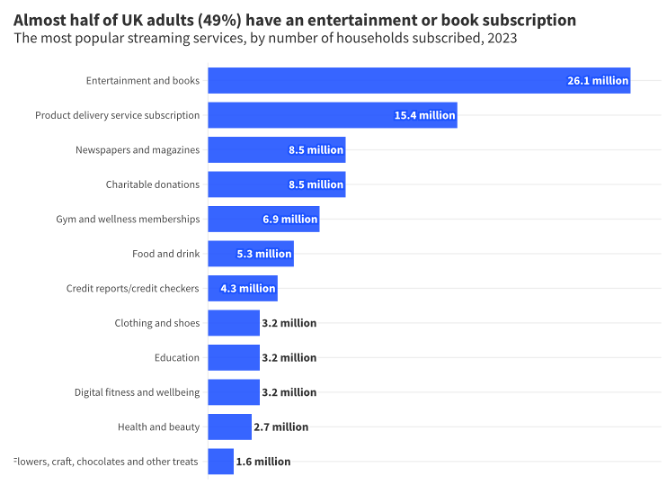
“how likely they would be to cancel their subscriptions if they were to increase slightly in price”
Clearly the different types of subscription are driven by differing motivations. Time and convenience are a key element, howeverthe value of the subscription is a vital consideration, too.
Data from the Department for Business & Trade, published in April 2023 (based on research with 2,000 UK adults conducted by Opinium Research in November 2021) showed the following level of subscription holdings:
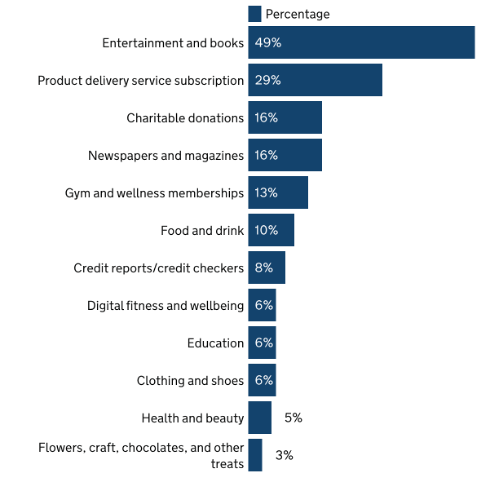
Respondents were asked the critical question as to their expected behaviour if prices were to increase and unsurprisingly, they were more likely to consider cancellation as listed below by subscription type (key sectors):
- 79% Food & Drink
- 76% Digital fitness and wellbeing
- 73% Health and beauty
- 66% Flowers, craft, chocolates and treats
- 64% Entertainment and books
- 64% Product delivery services
- 38% Charitable donations
Subscriptions to telephone and broadband services don’t seem to appear in the data. Perhaps they have ‘crossed the line’ into the utilities space? Digital connectivity may have become a physiological need, in the words of Maslow even. This seems fair considering that we all need data connectivity to live our day to day lives today.
But if we consider for a moment the broadband and fixed landline space, the regulator Ofcom has been busy making changes in the past few months that could impact the sector. On this basis, have sensitivities around price and service ever been so important to that sector – and are there considerations that can be applied across all subscription markets?
So, what does that mean to the customer contact community?
Well, there is a chance that a broken process earlier in the year – which made your contact centre hard to deal with – is going to result in customer retention issues when that customer reaches the end of their contract.
Or that automation process that you are thinking of implementing due to pressure from the business to reduce operational costs needs to be just right, or else it may result in driving customers not only to self-service, but away from your business altogether.
It could mean that you have an amount of retention work to do, or that you need to start thinking about additional marketing spend next year to attract new customers to maintain your numbers, never mind growing the customer base.
For many customers managing, their relationships digitally – like with NOW TV, for instance – should be easy. But my personal experience of trying to cancel a NOW subscription over the weekend was time-consuming and frustrating:
- Cancellation was not possible via the App which means logging onto my account,
- then being asked no fewer than 6 times whether I really wanted to cancel,
- and being presented with offers and discounts to retain me.
This feels like an example of when an understandable business desire to create a bit of friction has gone too far, turning off customers from coming back in the future.
However, the first that businesses with digital based relationships may know of my intent to cancel is when I’ve clicked on a box and my money stops the following month. Many will then commence an e-mail campaign, or outbound calling perhaps, to ‘win-back’.
One touch switching
The implementation of the Ofcom rules on one touch switching from September 12th enabled customers to move to a new provider with just one contact. This means that alternative network providers (alt-nets) – despite huge investment in their infrastructure – are now in a place where customers can simply walk away without having to contact them, similar to my cancellation of my NOW TV subscription.
The new provider manages the switching process and the incumbent has little option but to go with it. Are the developing the expectations that customers will have about the ease of cancelling their telco and broadband subscriptions being mirrored across other services?
Additional considerations
In our discussion, Simon, Jonathan and I also considered whether there is a clear role for NPS in customer retention and operational performance. This was a topic which was discussed also on a Scorebuddy webinar that I supported, recently. With the level of insight available from the contact centre, do you really still need to ask the question around likelihood to recommend a product or/service? It could be that you can see this through all the other data and insights at your disposal. However, you need to ensure that you have the time and knowledge to implement the changes needed, which is where businesses can fall short.
“CX has never been so important, moments of truth matter and there is a need for experience and empathy”
When it comes to growing any form of subscription business, there is a clear need to balance acquisition with the realities of ongoing customer service. The work of retention and win-back teams should not be underestimated, but if you get the customer service right then retention is less likely to be needed.
Scaling a business to cope with customer demands can be challenging. The transition from small in-house operations with wider departments helping where they can in supporting customer needs in those moments of truth (when something hasn’t been delivered as promised) can take people away from their roles in the wider business and risk future growth ambitions. Where customers have bought/subscribed via a click then the first time your team speak with them could be at the point of disconnection and considering the costs of developing your business or network, there is a need to maximise customer lifetime value.
When growing a business and a contact centre team, you need to ensure that you are properly supporting and developing your staff. As businesses grow it is not just customers numbers where retention may become a challenge. With Simon and Jonathan I discussed these challenges around recruitment and training, this is where we have seen outsourcers taking the load, so that “you do you and let the outsourcer do the heavy lifting”.
Is your customer contact approach fit for purpose?
With the potential challenges of growth and increasing costs in 2025 from minimum wage and national insurance increases ahead, maybe it is time to review where you are on your journey and whether there are opportunities to optimise current operations – through either process review or implementation of new contact centre technology?
Perhaps you’ve reached a point where you need additional support from an outsource partner who has walked this path before and can help you grow customer numbers and/or evolve to the next stage of your growth, whether that is with
- acquisition activity
- out of hours support,
- peak capacity or
- end to end customer service which allows you to focus on your core activity and growing your business.
You may have an existing operation that requires review, but whatever your customer contact challenge feel free to contact us so we can talk it through.
At Customer Contact Panel we have extensive experience in supporting our clients in identifying the right fit solution for their business.
Collectively Customer Contact Panel (CCP) have a lot of experience in contact centres and CX. However, as things are changing rapidly in the world of AI, we met with CCP to discuss some of the broader considerations, including what technology we could deliver as an alternative view of what could be our probable future reality with the support of AI – we agreed we would share the output.
The art of the possible?
We can talk about the pace and the tone of this piece, however the reality is that with appropriate questions raised and some boundaries that we included (some for our amusement) the content within this 10 minute AI generated “BotCast” not only demonstrates the capabilities of AI, but raises some interesting questions and considerations as to how CX evolves and what guard rails need to be in place.
Click here and have a listen, and of course, if you want to discuss we’d be happy to deploy some of our humans.
When you assemble a room of people with extensive levels of contact centre experience, as we did for our event hosted at Sutherland Labs, you know from the noise levels over coffee there are going to be some great conversations! Add some fantastic speakers from our outsource and technology networks to share their views of the market and a lively, open dialogue around challenges and opportunities (new and old) will follow.
We are looking forward to continuing these conversations and scheduling another event. But in the meantime, how do we bring so much collective experience together in a short article that does justice to the quality of the conversations?
Navigating Business Decisions in a Rapidly Evolving Landscape
In the current environment, companies face a range of critical decisions, from implementing new technologies to fostering employee engagement. Despite knowing what needs to be done, many organisations struggle to translate that knowledge into actionable outcomes. This disconnect is often a result of inadequate systems, outdated training and coaching models, and an inability to adapt to change.
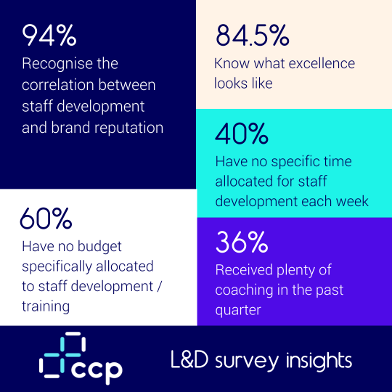
In our recent L&D survey it was apparent that there is a clear gap between knowing and doing. Results show that while employees understand their roles, there’s a significant disconnect between knowledge and execution. This is particularly evident in how businesses approach training, often relying on outdated, “once-and-done” programmes that fail to evolve alongside the changing work environment. As companies shift to remote work, many are noticing a reduction in employee loyalty and engagement, partially because of the lack of in-person interaction and relationship-building.
Addressing the Changing Needs: Evolving Training and Technology
To bridge this gap, organisations must rethink how they train their employees, particularly if they are to continue with a work from home or hybrid working model. Has enough been done to redesign training and refresher modules that better fit a virtual environment? Equally, more needs to be done to focus on continuous education rather than static, one-time courses which tick a box for compliance. Furthermore, conversational AI can be a powerful tool in reshaping learning; allowing employees to ask dynamic, evolving questions rather than relying on predefined solutions.
“Businesses recognise the correlation between staff development and brand reputation, but may not always apply the budget to ensure delivery”
AI offers the potential to unlock the true capabilities of people and data, but as we have said before is not a silver bullet. It can revolutionise business processes by supporting employees in their roles, reducing friction, and enhancing decision-making. AI can also help agents manage customer queries more efficiently, giving them access to foundational knowledge in real-time. However, the challenge lies in positioning AI correctly: not as a threat to jobs, but as a tool for augmenting human capabilities.
For example, AI’s ability to analyse customer intent and apply insights to guide agents through complex interactions can dramatically improve customer experience (CX). By properly integrating AI into business workflows, companies could potentially resolve the eternal challenge of moving from being seen as a cost centre to profit centre, unlocking new value opportunities across the customer journey.
Location strategy is still a consideration as the global market evolves. The outsourcing industry, particularly in sectors like fintech, IT support, and healthcare, appears poised for significant growth. We know countries such as South Africa have already emerged as strategic hubs for business services, offering talent and capabilities that align with the growing demand for multilingual and technologically adept service providers. Whilst there are valid concerns as to the capacity that remains available, with 33% unemployment in South Africa (60% for young people) as well as the wider continent opening for business, then combined with the capabilities of technology great opportunities remain available.
Overcoming Challenges in AI Adoption
While AI presents numerous opportunities, it also comes with significant challenges. Many process owners may be hesitant to adopt AI due to concerns about how it will impact their workforce and customer relationships. Meanwhile, senior leadership may be focused more heavily on the potential cost saving benefits. There’s a widespread misconception that AI will replace jobs, particularly in customer service. However, AI’s true value lies in assisting and enhancing human roles, not replacing them.
For businesses to adopt AI successfully, they need to:
- Align AI with company goals and culture: AI should be seen not as a technology investment, but as a strategic asset that drives both customer and employee experience.
- Shift from a cost-saving mindset to a value-driven approach: Technology shouldn’t be about cutting costs; it should unlock value, address problems at their root cause and improve service quality.
- Build the right business case: Secure buy-in from different budget owners by emphasising how AI can enhance outcomes across the organisation.
Aligning Metrics and Culture for the AI-Driven World
To fully leverage AI’s potential, cultural and operational changes are required. Business leaders need to:
- Align metrics with an automated world: Ensure that technology handles routine tasks, allowing people to focus on complex, human-centric work.
- Redefine the agent role: The agents of the future will need to deliver more value and possess different skills compared to traditional customer service roles.
- Foster a culture of continuous improvement: Embrace ongoing evolution, where AI serves to complement human skills and free up time for higher-value tasks.
- Focus on proactive engagement: Let technology handle the repetitive, allowing people to engage with customers in a more meaningful way.
- Encourage bravery in decision-making: Leaders must support bold decisions around AI investment to drive long-term success.
Rob Wiles, Zoom“AI is not the solution, it is a key to unlocking it”
Irrespective of delivery location, the future of CX delivery will increasingly rely on AI and automation to enhance customer journeys, optimise operations, and drive sustainable growth.
Transformation is never-ending. Businesses must approach AI and automation not as one-time projects but as ongoing evolutions. This requires understanding the unique challenges they face, aligning technology with business goals, and ensuring that AI enhances rather than replaces the human element.
With the right strategy, AI can unlock unprecedented opportunities for growth, helping companies stay competitive in a rapidly changing world. However, without the appropriate attention to employee experience, success will be illusory or limited.
Delivering the right experiences
At Customer Contact Panel we support organisations in delivering contact centres that match their ambitions. In a Deloitte Digital research articles from May 2024 it was cited that 55% of contact centre leaders reported that they didn’t meet their strategic goals in 2023 and 76% reported that their agents were overwhelmed by systems and information*.
If you are facing challenges meeting your strategic goals or fulfilling the ambitions you have for your people, customers or technology, we have the experience to support you. Just ask.